


Last Updated: October 25, 2026
Quick Summary
Pickleball paddle core shock absorption is determined by whether you choose foam-based cores, which absorb more vibration immediately but lose durability within a year, or honeycomb-based cores, which maintain consistent shock absorption for two to three years. For most recreational players, a 12mm to 16mm core thickness provides good pickleball paddle core shock absorption while balancing control and forgiveness.
- Foam cores compress to absorb shock but lose effectiveness within twelve to eighteen months of regular play.
- Honeycomb cores with dampening layers maintain their shock absorption for two to three years of regular play.
- A 13mm to 14mm core thickness offers the best balance of shock absorption and control for most players.
- Grip size, overgrips, and edge construction affect perceived vibration as much as core material does.
- Test paddles with the drop test and handle vibration check before committing to compare shock absorption.
Table of Contents
- How Pickleball Paddle Core Construction Affects Shock Absorption
- Foam vs. Honeycomb Pickleball Paddle Cores: Which Absorbs More Vibration
- Pickleball Paddle Core Thickness and Its Impact on Impact Damping
- Pickleball Paddle Vibration Dampening: What Materials Actually Work
- Best Control Pickleball Paddles: Balancing Shock Absorption with Touch
- Evo-Lite Series Polypropylene Core: Performance Specs and Real-Court Feel
- Choosing Your Shock-Absorbing Paddle for Your Game
- Frequently Asked Questions
How Pickleball Paddle Core Construction Affects Shock Absorption
The core sits between the face and handle, and pickleball paddle core shock absorption determines whether you get soft touch or explosive power while controlling vibration.
On impact, energy travels through the face into the core.
Pickleball paddle cores fall into two categories: foam-based (softer, more forgiving) and honeycomb-based (firmer, more stable). Neither is universally better, it depends on your game style and what your arm can handle.
Thickness matters too: thicker cores absorb more shock but add weight, while thinner cores stay lighter but sacrifice vibration reduction.
Foam vs. Honeycomb Pickleball Paddle Cores: Which Absorbs More Vibration
Foam and honeycomb cores manage impact energy differently, which determines how much vibration reaches your hand and how that changes over the paddle's life.
How foam cores dissipate impact energy
Foam cores, typically EVA or cross-linked polypropylene, absorb shock through cell compression. Cells beneath the strike point compress and shear, converting kinetic energy into heat and lateral deformation rather than transmitting it up the handle.
The trade-off is mechanical fatigue: over hundreds of strikes, EVA foam can take a permanent set, which is why foam-core paddles often feel deader after a season of frequent play.
How honeycomb cores dissipate impact energy
Honeycomb cores, polypropylene, Nomex, or aluminum, absorb shock through cell-wall flex and air-pocket damping. Because the walls are structural rather than compressive, honeycomb holds its geometry far longer: a polypropylene honeycomb core typically maintains its feel for two to three years of regular play, while an EVA foam core may soften within twelve to eighteen months.
The catch: honeycomb cores transmit higher-frequency vibration. Stiff cell walls return energy quickly, so you feel a sharper, more tactile pop, great for feedback and power, less comfortable for sensitive elbows.
A simple at-home test to compare shock absorption
You do not need a lab to compare cores:
- Drop test. Hold the paddle by the handle with the face horizontal, drop a standard pickleball from 36 inches onto the center, and note how high it bounces. A higher bounce means more energy is being returned to the ball rather than absorbed by the core, which usually correlates with a firmer, less shock-absorbing feel.
- Handle vibration check. Repeat the drop and rest two fingers lightly on the handle butt. Rate the vibration you feel on a 1-5 scale. This is subjective, but it is consistent enough to compare two paddles side by side.
- Off-center comparison. Repeat both tests one inch from the edge. The difference between center and edge tells you how much the sweet spot is doing the shock-absorption work versus the core material itself.
Run all three on a foam-core and a honeycomb-core paddle of similar thickness and weight for a clearer read on which core absorbs more shock for your hand than any spec sheet.
Which core wins for shock absorption?
For immediate vibration reduction, a soft foam core, especially EVA, usually compresses more and transmits less high-frequency vibration on the first hit. For consistent shock absorption over years, a polypropylene honeycomb core with a dampening layer can be more reliable because it does not lose its geometry. If you play two or more times per week and want the paddle to feel the same in month twelve as month one, honeycomb can be a more reliable choice.
Pickleball Paddle Core Thickness and Its Impact on Impact Damping
Core thickness directly affects how much shock your paddle can absorb. Thicker cores have more material to dissipate energy.
Most competitive paddles range from 12mm to 16mm. A 12mm core is lighter and quicker; a 16mm core provides maximum shock absorption and forgiveness.
Practically: if you play multiple matches in one day or deal with arm issues, a thicker core helps.
Pickleball Paddle Vibration Dampening: What Materials Actually Work
Material choice is only half the vibration story. The other half is how the core, face, edge, and grip work together, and what shock absorption can and cannot tell you about arm comfort.
The three dampening mechanisms in a paddle
Vibration is managed at three points, and a paddle that addresses only one will feel harsh regardless of core material:
- Core compression and shear. Foam cores dampen by deforming; honeycomb cores dampen by cell-wall flex and air-pocket cushioning. This is the primary mechanism and the one most buyers focus on.
- Face-to-core interface. A thin elastomer, foam, or adhesive layer between the face and the core decouples the two and blunts high-frequency vibration before it reaches the handle. Paddles without this layer often feel "pingy" even with a soft core.
- Edge and handle isolation. Edge guards, edge foam, and the handle assembly act as the final barrier. A rigid edge guard transmits more vibration; a foam-filled or rubberized edge absorbs it. The grip, its size, material, and whether you use an overgrip, is the last variable between the paddle and your hand.
Material-by-material dampening profile
Heat-treated polypropylene honeycomb. The most common core in production paddles.
Cross-linked polypropylene foam. A middle path, softer than honeycomb, more resilient than EVA, with a muted feel and better resistance to compression set.
Nomex honeycomb. Aramid-fiber honeycomb used in some higher-end paddles.
Aluminum honeycomb. Rare in current paddles but still found in older models. Light and stiff, with poor vibration dampening.
Setup factors that change perceived vibration
Two players can use the same paddle and report very different comfort. The variables:
- Grip size. A grip that is too small encourages a tighter squeeze, increasing forearm tension and amplifying perceived vibration. Most players fit best with a 4.25-inch or 4.5-inch grip; if between sizes, go larger.
- Grip material and overgrips. Cushioned overgrips and perforated grips absorb a meaningful amount of high-frequency vibration before it reaches your hand. A fresh overgrip is one of the cheapest vibration upgrades available.
- Paddle weight and balance. Heavier paddles carry more inertia and deflect more on impact, which can reduce vibration transfer, but they also fatigue the arm faster. A head-light balance reduces swing strain but may transmit more shock.
What shock absorption can and cannot tell you about arm comfort
This is where most guides overreach. A paddle that absorbs more vibration may feel more comfortable, but shock absorption is not a clinical measure and no paddle is a medical device. The evidence supports reducing vibration transfer and grip tension as reasonable steps toward comfort; it does not support claims that a specific core will prevent or treat elbow, wrist, or shoulder conditions.
The practical takeaway
For most players, the highest-impact vibration changes are, in order: a cushioned overgrip, a correctly sized grip, a core with a dampening layer at the face interface, and a foam-filled or rubberized edge. Material choice matters, but it is one lever among several. Test the whole setup, not just the core spec.
Best Control Pickleball Paddles: Balancing Shock Absorption with Touch
Control paddles prioritize soft feel and precision over raw power, designed for players who value placement and touch in the soft game.
Control paddles often use softer cores that respond gently to the ball.
Surface texture matters too. A high-grit coating increases friction, helping you impart spin without sacrificing control.
Control and shock absorption aren't opposites. Control paddles can absorb vibration efficiently, which can improve touch.
Evo-Lite Series Polypropylene Core: Performance Specs and Real-Court Feel
The Evo-Lite Series from Salted City Sports uses a heat-treated synthetic polypropylene core that delivers reliable shock absorption and consistent performance.
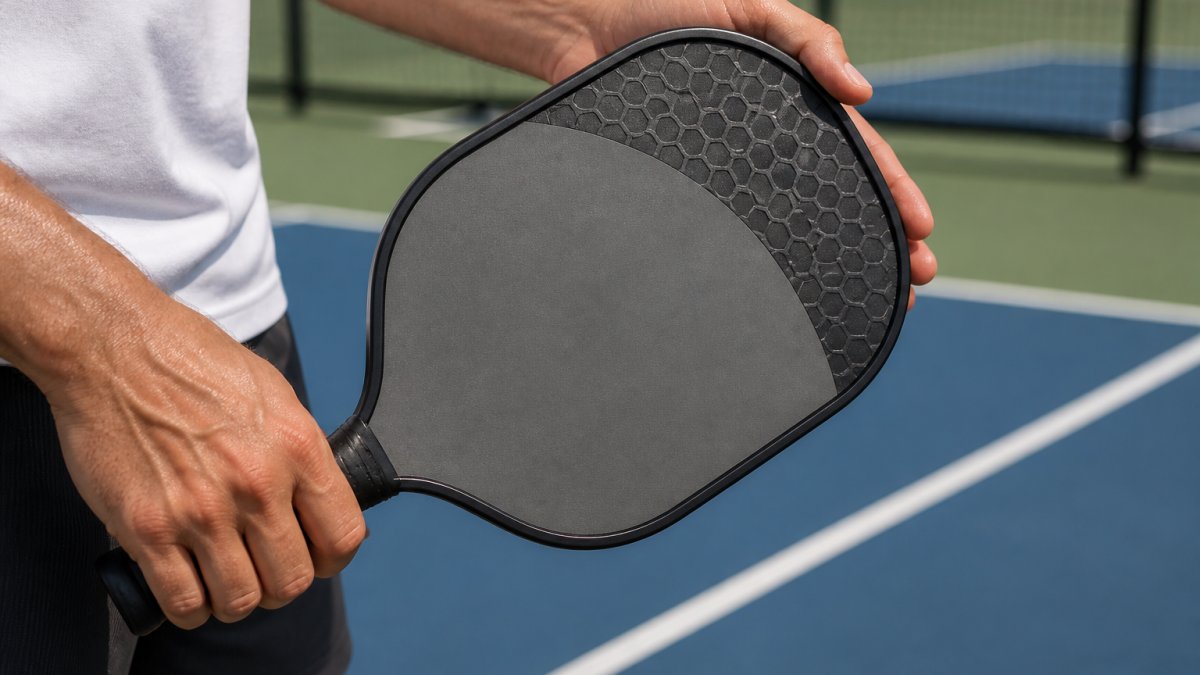
Key specs: 13mm polypropylene core, 7.8 to 8.2 ounces, 16.5" by 7.5" overall dimensions. The polypropylene construction provides a large sweet spot, so more shots land where you intended, and the core resists delamination and breakdown, so your paddle performs the same in month one and month twelve.
The surface texture on Evo-Lite paddles is USA Pickleball approved and engineered for spin, so you can put serious rotation on the ball without losing control or placement.
What makes this core work: polypropylene naturally dampens vibration while maintaining structural integrity.
The real-court feel is smooth: no harsh vibration feedback, but enough ball feel to make precise adjustments.
| Feature | Evo-Lite Series | Typical Foam Core | Typical Honeycomb Core |
|---|---|---|---|
| Core Material | Heat-treated polypropylene | EVA foam | Polymer honeycomb |
| Core Thickness | 13mm | 12-14mm | 14-16mm |
| Weight | 7.8-8.2 oz | 7.5-8.0 oz | 8.0-8.5 oz |
| Shock Absorption | Excellent | Very good | Good |
| Durability | Excellent | Fair | Excellent |
| Sweet Spot Size | Large | Medium | Medium-large |
| Typical Lifespan | 2-3 years | 1-2 years | 3+ years |
Choosing Your Shock-Absorbing Paddle for Your Game
Picking the right shock-absorbing paddle comes down to three questions: How often do you play? What's your game style? Do you have any arm or joint concerns?
If you play multiple times per week, durability matters. A polypropylene or honeycomb core will outlast foam.
Your game style determines what kind of shock absorption you need. Power players benefit from stiffer cores that provide stability on hard hits.
Arm comfort is non-negotiable.
When you're ready to buy, browse the pickleball paddles collection to find shock-absorbing options that match your needs. For a comprehensive guide to paddle selection beyond just shock absorption, check out all about pickleball paddles. If you want to understand how different materials affect vibration dampening, read about carbon fiber vs fiberglass paddle durability. And if you're playing in a USA Pickleball sanctioned event, verify that paddles meet USA Pickleball standards before your match.
The best pickleball paddle core for shock absorption is the one that matches your playing style and durability expectations.
Frequently Asked Questions
What is the best core for pickleball paddles when shock absorption matters most?
Heat-treated synthetic polypropylene cores rank among the most effective materials for shock absorption in pickleball paddles. A 13mm polypropylene core provides a large sweet spot while dampening vibration on off-center hits. The material's flexibility allows it to absorb impact energy without transmitting harsh vibrations to your arm and hand, making it ideal for players concerned with comfort during extended play sessions.
Is foam core better than honeycomb for reducing vibration in pickleball paddles?
Foam-core paddles can generally provide good shock absorption and vibration reduction. Foam materials compress slightly on impact, absorbing energy before it reaches your hand. Honeycomb cores are stiffer and transfer more vibration, though they offer different performance trade-offs. For shock absorption specifically, foam-based construction can be a good choice for minimizing arm strain and improving comfort during rallies.
Does pickleball paddle core thickness really affect how much shock is absorbed?
Yes, core thickness directly impacts shock absorption. A 13mm core thickness can provide a good balance between impact damping and playability. Thicker cores absorb more vibration but can reduce responsiveness and feel. Thinner cores offer quicker ball response but transmit more shock. A 13mm core can give recreational and competitive players a good combination of vibration reduction and control without sacrificing paddle feel or maneuverability.
Can a shock-absorbing paddle still deliver enough power for aggressive play?
Absolutely. Modern shock-absorbing paddles like those in the Evo-Lite Series combine vibration dampening with solid power output. The polypropylene core absorbs impact vibration while the textured surface and overall paddle construction maintain pace and spin potential. You don't sacrifice power for comfort, you gain both. The larger sweet spot on shock-absorbing cores actually helps consistency on power shots by forgiving off-center contact.
Finding the right paddle core takes some experimentation, but the payoff is worth it. Better shock absorption means more comfortable play and fewer post-match arm issues. At Salted City Sports, we build paddles with cores designed for real play, USA Pickleball approved and built to last. Get started with a shock-absorbing paddle that elevates both your comfort and your game.
