


Last Updated: November 5, 2026
Quick Summary
A high-grit coating is a textured paddle face that can add spin, but it helps control only when the texture stays inside approved limits and is tested against a control paddle. Private clubs should run a side-by-side test on dinks, drives, serves, blocks and wet balls before standardizing on one.
- Run a side-by-side test with one control paddle so the coating is the only variable.
- Score each test 1 to 5 and adopt a paddle only if it matches or beats the control on most tests.
- Use the block and reset test, since an aggressive face can make soft resets pop up.
- Clean the face with a damp microfiber cloth and inspect it monthly under raking light.
- Confirm USA Pickleball approval status against the official source before each season.
Table of Contents
- What High-Grit Coatings Are and How They Work
- How Surface Roughness Affects Spin and Ball Control
- Step-by-Step: How to Evaluate a High-Grit Surface Before You Order
- How to Choose Paddle Weight for Control Alongside Surface Texture
- Keeping Surface Texture Consistent: Durability, Wear, and Cleaning
- USA Pickleball Approval Requirements for Sanctioned Play
- Ordering Custom High-Grit Paddles for Your Private Club
- Frequently Asked Questions
What High-Grit Coatings Are and How They Work
High-grit coating is a textured surface treatment applied to the face of a pickleball paddle. Our USA Pickleball approved paddles feature a surface texture designed to help players put more spin on the ball without giving up control or placement. To see how custom paddle construction affects control and power, read how custom pickleball paddles improve control and power. Understanding what that texture does is the first step to judging whether it's worth paying for.
The idea is simple. A rougher face grips the ball for a split second longer at contact, which gives the player more chance to brush across it and create spin. Here's the catch: the coating works within rules, so the texture has to stay inside approved limits to count for sanctioned play.
Our paddles use a fiberglass surface paired with a 13mm polypropylene core. A texture that wears unevenly feels different from one shot to the next, so consistency matters as much as raw grit.
How Surface Roughness Affects Spin and Ball Control
Surface roughness and spin are linked, but the relationship is not a straight line. For a broader look at what makes a paddle perform well, see what makes a high performance pickleball paddle. More texture can add bite, yet a face that's too aggressive can make the ball feel hard to place. The goal is controlled friction, not maximum friction.
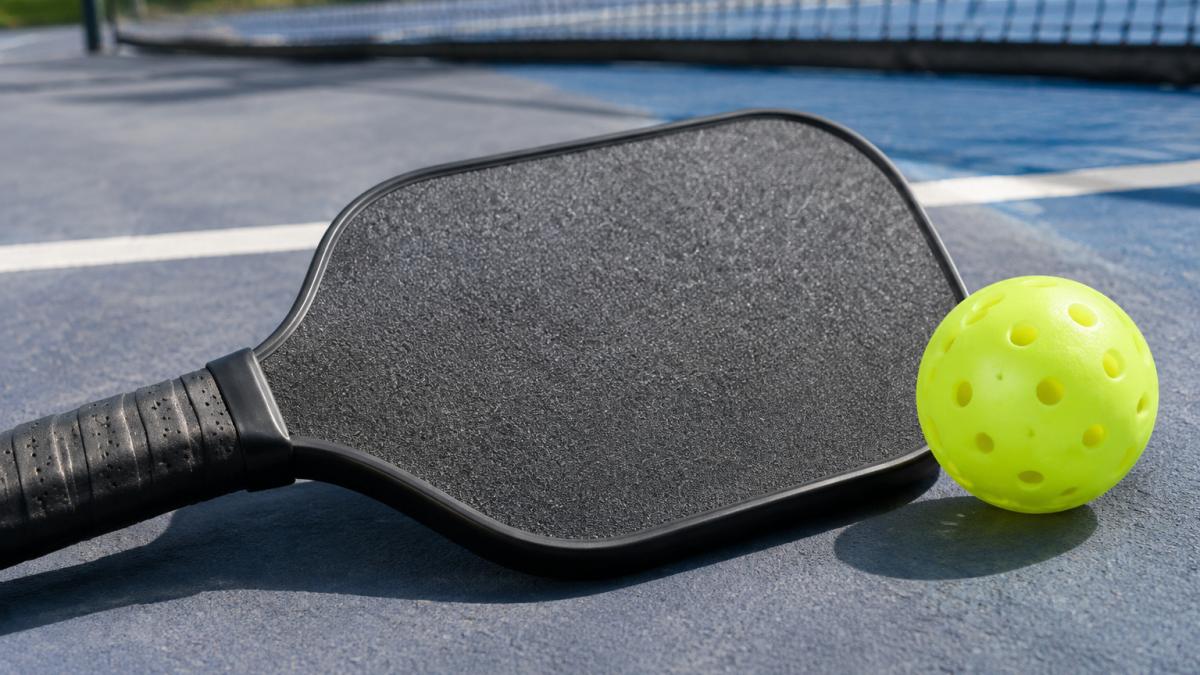
!Close-up of a pickleball paddle face with a textured surface resting on a court, a ball nearby, natural daylight
Players usually notice three things:
- Spin: the ball dips and kicks more on drives and dinks
- Control: shots land where you aim them, even at speed
- Feel: the paddle responds predictably across the face
A common mistake is judging a paddle by spin alone. Test it across a full practice session, including soft dinks, so you know whether control holds up when the stakes rise.
Step-by-Step: How to Evaluate a High-Grit Surface Before You Order
A face described only as "grippy" is not enough for a private club deciding whether to standardize on a high-grit paddle. You need a repeatable test that separates the coating's contribution from the player's contribution, so the result holds up when a committee asks why you chose one paddle over another.
Set up the test so the coating is the only variable. Use the same ball brand and model throughout, the same court, and the same two hitters. Assign one paddle as the control, a stock paddle with a smooth or lightly textured face, and one as the test paddle. Do not change weight, grip size, or ball between trials.
Measure, don't just observe. A phone on a tripod behind the baseline, filming at 60 frames per second or higher, is enough to review contact and ball flight. For each shot type, record where the ball lands relative to a target and how high it clears the net.
- Dinks (20 reps per paddle). From the kitchen line, hit cross-court dinks to a target zone. Count how many land inside the zone and note the average net clearance. A rougher face can add friction at contact, which may help you keep the ball lower and impart more spin.
- Topspin drives (15 reps per paddle). From the baseline, hit drives with the same swing path. Watch for dip: does the ball land shorter than it would with the control paddle at the same swing speed? That dip is the coating converting your low-to-high path into forward rotation.
- Serves (15 reps per paddle). Mark landing spread. Tighter grouping with the test paddle suggests the texture is helping you repeat contact rather than adding unpredictable bite.
- Blocks and resets (15 reps per paddle). Have a partner drive at you and count how many blocks land in the kitchen. This is where control, not spin, decides the point, and it is the shot most likely to expose an over-aggressive face.
- Wet-ball trial (10 reps per paddle). Wipe the ball with a damp cloth between reps. Texture that performs only when dry is a poor fit for humid outdoor play or clubs that host morning sessions with dew on the court.
| Test | What to Watch For | Pass Signal |
|---|---|---|
| Dinks | Net clearance and landing zone | Lower clearance, more balls in zone than control |
| Topspin drives | Dip and bounce | Ball lands shorter at the same swing speed |
| Serves | Landing spread | Tighter grouping than control |
| Blocks and resets | Kitchen landings | Equal or better than control |
| Wet-ball trial | Grip retention | Minimal drop-off from dry results |
Score it, don't vibe it. Give each test a simple 1-5 score for the test paddle relative to the control, and total the five scores. A paddle that wins on spin but loses on blocks and wet conditions is a specialty tool, not a club standard. A paddle is generally worth adopting across a membership only if it matches or beats the control on most of the tests.
Watch out: testing only with your strongest shot hides the coating's weaknesses. A high-grit face that adds spin on drives can make soft resets pop up if the texture is too aggressive for your touch, the block and reset test is the one that catches this before you order for the whole club.
Keep the video and the score sheet. When a member asks why the club chose a particular face, a documented side-by-side test is a better answer than a manufacturer's claim.
How to Choose Paddle Weight for Control Alongside Surface Texture
Weight and texture work together. Our paddles weigh between 7.8 and 8.2 ounces. For more on whether custom printing or surface treatment changes performance, read does custom printing affect paddle performance.
If your texture is aggressive, a slightly heavier paddle can help steady the face on hard hits. If you rely on quick reactions, stay near the lighter end of the range so the texture doesn't feel hard to direct.
Watch out: switching weight and texture at the same time makes it impossible to tell which change helped. Change one variable at a time.
Keeping Surface Texture Consistent: Durability, Wear, and Cleaning
A high-grit face is a wear item, not a permanent feature. The texture that produces spin is the same texture that contacts the ball, the court, and your bag, so it degrades with use.
What actually wears the face. Three forces do most of the damage: ball contact (especially hard drives and serves), abrasive court surfaces when a paddle is set down or scraped, and grit trapped in the face from dirty balls or dusty courts. Sweat and sunscreen are less about abrasion and more about filling the texture valleys with residue, which reduces grip even when the coating itself is intact.
Clean it correctly. After each session, wipe the face with a damp microfiber cloth and let it air-dry. For built-up residue, a soft brush with a drop of mild dish soap and water is enough; rinse and dry fully. Avoid solvent-based cleaners, alcohol-heavy wipes, and abrasive pads, they can soften or polish the texture rather than clean it.
Inspect on a schedule, not by feel. Once a month, clean and dry the face, then inspect under raking light, hold the paddle at a low angle to a window or lamp so the texture casts small shadows. Look for three things:
- Polished patches where the texture has flattened, usually in the center of the face where most contact happens.
- Uneven wear between the center and the edges, which changes how the paddle feels across the face.
- Filled valleys where residue or court grit has packed into the texture and will not brush out.
Plan replacement around play volume, not calendar time. A recreational player who plays twice a week may get many months from a textured face; a club that runs daily open play, leagues, and lessons will wear paddles far faster because the same paddles see constant contact. Rotating worn loaners also keeps practice consistent, and pickleball practice drills can help players maintain control and spin even when a paddle’s texture has begun to fade.
Watch out: a paddle that looks clean can still be worn. Residue hides polished patches, so inspect after cleaning and drying, not before, otherwise you will keep a dead face in play because it looked fine when it was dirty.
Conformity and wear. USA Pickleball equipment rules govern the paddle as submitted and approved, and surface texture is part of that approval.
Budget for it. Treat high-grit paddles as consumables in the club's equipment plan the same way you would treat balls and nets. A rotation that retires the most-worn paddles each season keeps member experience consistent and avoids the situation where one member is playing with a fresh face and another with a polished one in the same league match.
USA Pickleball Approval Requirements for Sanctioned Play
If your club hosts sanctioned events, paddles must meet USA Pickleball equipment rules. Our paddles are USA Pickleball approved, and you can check the current approval status on the USA Pickleball website before ordering. Our guide to verifying USA Pickleball approved paddles walks through the steps. Rules can change, so confirm against the official source rather than relying on older listings.
This is especially important for tournament directors who need every paddle in play to be legal.
Ordering Custom High-Grit Paddles for Your Private Club
Private clubs often want paddles that match the club's brand and perform well for members. Our Advanced Custom Pickleball Paddle lets you design your own look. There are no minimum order requirements, so a small club can start with a few paddles and expand later.
Our team can help you think through layout and colors if you're not a designer.
The Advanced Custom Pickleball Paddle is listed at $169.00. The Badlands and New Skool Evo-Lite Series paddles are listed at $92.00 each. Before ordering for members, test one paddle using the evaluation steps above so you know the texture performs as expected.
Ready to start? Design your custom paddle and bring your club's vision to life.

Frequently Asked Questions
How does a high-grit paddle surface affect spin?
A rougher paddle face gives the ball more friction at contact, which lets the paddle grip the ball briefly and impart more spin. The effect depends on the surface material, how the grit is applied, and the player's swing speed and contact angle. Because the gain comes from friction rather than power, players usually notice it most on dinks, drives with a brushing motion, and short topspin shots. Test a few paddles side by side on the same court before deciding.
Does a rougher pickleball paddle provide more control?
Texture can help control by making the ball bite the face, which reduces the skid off the paddle on soft shots. However, control also depends on paddle weight, core construction, and your technique. A rougher surface does not automatically mean more control, so compare the surface with the paddle's weight and balance rather than judging it alone.
Are textured pickleball paddles allowed in sanctioned play?
Textured paddles can be used in USA Pickleball sanctioned play only if they appear on the USA Pickleball Approved Paddle List. Approval depends on the specific model and its construction, not on the presence of texture alone. Before ordering custom paddles for a sanctioned tournament, confirm the exact model and configuration against the current USA Pickleball approval status.
How do I know if my paddle surface has worn down?
Look for smoothing of the texture, shiny or polished patches on the face, and a noticeable drop in spin on shots that used to bite the ball. Compare the current surface to a new paddle of the same model if you have one. Surface wear usually shows first on the areas where the ball makes the most contact, so check those zones before assuming the whole face has degraded.
