


Last Updated: October 26, 2026
Quick Summary
A high performance pickleball paddle combines core materials, surface texture, weight distribution, and construction quality to enhance power, control, spin, and durability. Most high performance pickleball paddles weigh 7.8 to 8.2 ounces and use a 13mm polypropylene honeycomb core that balances forgiveness with responsiveness. The best choice matches your playing style and skill level rather than prioritizing a single attribute.
- Most high performance pickleball paddles use a 13mm core that creates a larger sweet spot while maintaining responsiveness.
- Paddle weight between 7.8 and 8.2 ounces lets players add power through technique rather than weight alone.
- USA Pickleball approved paddles must not exceed 16.625 inches in length, 8.375 inches in width, or 11 ounces.
- Performance claims should be measured using swingweight, twistweight, spin rate in RPM, and power output rather than marketing descriptions.
- Beginners should prioritize forgiveness and control; intermediates can trade some forgiveness for spin; advanced players benefit from measuring swingweight and twistweight.
Table of Contents
- What Defines a High Performance Pickleball Paddle
- Pickleball Paddle Core Thickness and Its Impact on Play
- Pickleball Paddle Weight for Control vs. Power
- Foam vs. Honeycomb Pickleball Paddles: Core Materials Explained
- USA Pickleball Approved Paddles: Tournament Standards and Compliance
- Performance Trade-Offs: Power, Control, Spin, and Durability
- Choosing Your High Performance Paddle
- Frequently Asked Questions
What Defines a High Performance Pickleball Paddle
A high performance pickleball paddle combines design elements that enhance power, control, spin, and durability.
The best high performance pickleball paddles balance multiple attributes rather than excelling in just one. According to Pickleball Effect's 2026 paddle testing data, reviewers now measure performance using quantified metrics including swingweight, twistweight, spin RPM, and power output instead of relying on general descriptions alone.
What most guides miss is that a paddle marketed for high performance often involves tradeoffs. Matt's Pickleball advanced player rankings describe how high-end paddles deliver excellent performance in specific areas while accepting limitations in others.
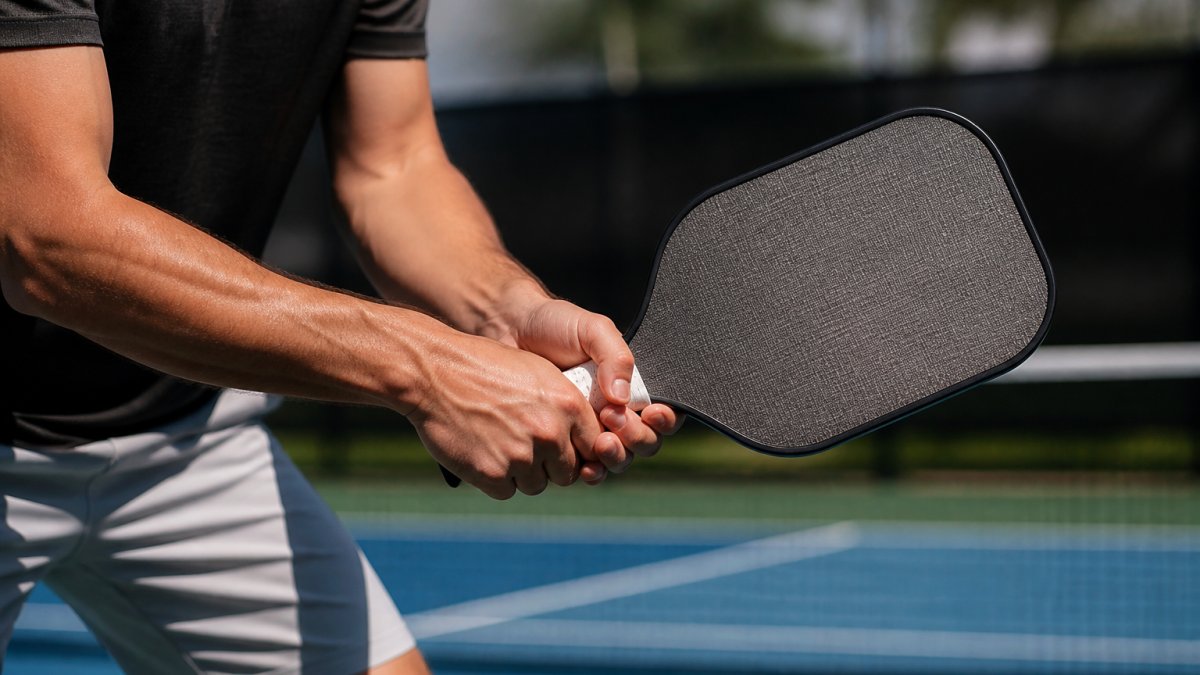
Understanding these tradeoffs helps you match a paddle to your playing style and skill level rather than chasing the most expensive option.
Pickleball Paddle Core Thickness and Its Impact on Play
Core thickness directly affects how a paddle responds to the ball and how much energy you must generate. Most high performance pickleball paddles use a 13mm core.
A thicker core (13mm) creates a larger sweet spot, so slightly off-center shots still travel where you intended. The extra material reduces vibration, improving touch on dinks and resets.
Our Evo-Lite Series paddles feature a 13mm heat-treated polypropylene core that expands your sweet spot and enhances shot placement.
Thinner cores (under 13mm) offer more direct response and swing speed but sacrifice forgiveness; thicker cores (over 13mm) maximize the sweet spot but add weight and can feel sluggish.
| Core Thickness | Sweet Spot Size | Touch/Control | Power Potential | Best For |
|---|---|---|---|---|
| Under 13mm | Smaller | Excellent | Lower | Advanced players prioritizing precision |
| 13mm | Larger | Very Good | Balanced | Most recreational and competitive players |
| Over 13mm | Largest | Good | Higher | Players seeking maximum forgiveness |
Pickleball Paddle Weight for Control vs. Power
Paddle weight changes how the paddle feels in your hand and how much effort you need to generate speed. Most high performance pickleball paddles weigh 7.8 to 8.2 ounces.
Lighter paddles (under 7.8 oz) demand less arm effort and swing faster, making them easier to maneuver at the net and less fatiguing in long matches.
The 7.8-8.2 oz range lets players add power through technique rather than paddle weight alone.
Your ideal weight depends on style: lean heavier for aggressive drives and serves, lighter for dink exchanges and net play. Most players adapt quickly within this range.
Foam vs. Honeycomb Pickleball Paddles: Core Materials Explained
The core is the engine of a high performance pickleball paddle, determining energy transfer, sweet spot size, vibration, and how long it holds its playing characteristics. Carbon Fiber vs Fiberglass Paddle Durability Explained covers how face materials interact with core construction to affect overall durability and playability over time. Nearly every performance paddle uses a polypropylene honeycomb core, a heat-formed polymer cell structure.
The three core constructions you will actually encounter
| Core Type | How It Is Built | Typical Feel | Durability Pattern | Common Use |
|---|---|---|---|---|
| Polypropylene honeycomb | Heat-treated polymer cells, usually 13mm or 16mm thick | Balanced pop with damped vibration | Holds shape well; cell walls can crush under repeated hard impacts over long periods | Most recreational and competitive paddles |
| Aramid honeycomb | Aramid fiber cells, lighter and stiffer | Crisp, lively, more feedback | Can dent or crack at cell edges with heavy edge impacts | Power-oriented and some premium models |
| Foam-injected | Polyurethane or EVA foam fills the core cavity, often with a honeycomb skeleton | Soft, muted, very forgiving | Foam can compress over time, gradually reducing pop | Control-first and arm-friendly designs |
What the core actually does to performance
Energy return. Stiffer honeycomb cells (high-density polymer) deform less at impact, returning more energy to the ball, the mechanism behind "power" cores.
Sweet spot size. A 13mm core is the common competitive compromise: enough forgiveness without the sluggish feel some players report from 16mm.
Vibration damping. Thicker polymer cores reduce the sting of off-center hits.
Weight and swingweight. Swingweight, not static weight, drives how fast the paddle feels through the air.
The durability question competitors skip
Core degradation is the least discussed and most consequential long-term issue. Polypropylene cell walls can crush under thousands of hard impacts. That's why warranty terms and edge-guard construction are better durability signals than marketing claims. Look for reinforced edge guards, a stated warranty period, and lifespan guidance; a cheap paddle replaced every season can cost more per year than a durable model with a longer warranty.
How to choose by playing profile
- Power-first players (drives, serves, put-aways): stiffer honeycomb, high-density polymer, 13mm.
- Control-first players (dinks, resets, net exchanges): softer polymer, with vibration damping.
- Spin-focused players: core choice matters less than face texture, pair a textured face with a core that does not deaden feel.
- Arm-sensitive or high-volume players: prioritize thick polymer cores and a comfortable grip, and treat durability as a budget line item.
Carbon Fiber vs Fiberglass Paddle Durability Explained covers how face materials interact with core construction to affect overall durability and playability over time.
USA Pickleball Approved Paddles: Tournament Standards and Compliance
Tournament play requires paddles that meet USA Pickleball specifications, which ensure fair competition and player safety across sanctioned events.
USA Pickleball approved paddles must meet specific size, weight, and material requirements. The paddle face cannot exceed 16.625 inches in length or 8.375 inches in width. Weight must be under 11 ounces.
Compliance matters if you play tournaments or competitive leagues: a paddle that performs beautifully in casual play might not be legal for sanctioned matches, so verify approval before investing.
Our Evo-Lite Series paddles are USA Pickleball approved, meaning they meet all official standards for competitive play.
Performance Trade-Offs: Power, Control, Spin, and Durability
Most paddle guides describe trade-offs in the abstract. This section maps each performance dimension to the player who benefits, explains the mechanism, and gives you a repeatable way to compare claims.
A repeatable way to compare paddles
Performance claims are only useful if measured the same way. Look for these five metrics serious testers report:
- Static weight (ounces), what the paddle weighs on a scale.
- Swingweight, how heavy the paddle feels when swung; the best predictor of hand speed at the net.
- Twistweight, resistance to twisting on off-center hits; the best predictor of forgiveness.
- Spin rate (RPM), measured ball rotation on a standardized shot; depends heavily on face texture.
- Power output, ball speed off the face at a controlled swing speed.
The trade-off matrix by skill level
| Dimension | Mechanism | What You Give Up | Best Fit |
|---|---|---|---|
| Power | Stiffer face, higher swingweight, head-heavy balance | Touch at the net, hand speed, fatigue resistance | Intermediate to advanced players with developed technique who can control pace |
| Control | Softer face, lower swingweight, foam or thick core | Put-away power on drives and serves | Beginners through advanced net players; dink and reset specialists |
| Spin | High-grit textured face, rough surface coating | Slightly less direct power transfer; texture wears over time | Players using slices, topspin drives, and third-shot drops |
| Forgiveness | Large sweet spot, high twistweight, 16mm core | Maneuverability and fast hand speed | Beginners, older players, and anyone who hits off-center under pressure |
| Durability | Reinforced edge guard, heat-treated core, quality face bonding | Higher upfront cost, sometimes more static weight | Frequent players and tournament competitors |
Skill level changes the answer
Beginners should weight forgiveness and control first. A powerful paddle amplifies bad technique, off-center hits fly long, and the stiff feel punishes mishits.
Intermediates can trade some forgiveness for spin and controlled power. A 13mm core with a textured face pays off: enough pop to finish points, enough touch to survive dink rallies.
Advanced players can exploit a power paddle because their technique converts pace into placement, and they benefit most from measuring swingweight and twistweight, since small differences change hand-fighting at the net.
The durability dimension most guides ignore
Durability is a performance attribute, not an afterthought: face texture wears down, core cells soften, and edge guards take the brunt of court scrapes. Weigh price ÷ expected months of competitive play rather than sticker price, and check warranty length as a proxy for the maker's confidence.
Pickleball Paddle Core Thickness and Its Impact on Play explores how core construction affects spin response and forgiveness in more detail.
Choosing Your High Performance Paddle
Selecting the right high performance pickleball paddle starts with honest assessment of your playing style and priorities.
Ask three questions: Do you play primarily at the net or from the baseline? Are you competing in tournaments or playing recreationally? How often do you play each week?
The Evo-Lite Series from Salted City Sports offers a proven starting point. Browse Trifecta | Evo-Lite Series to explore high-performance paddles that embody these design principles.

Our paddles start at $92, making them accessible for building your collection.
For corporate paddle collections or custom-branded team gear, Salted City Sports specializes in full-surface customization with no minimum order requirements.
Top Pickleball Paddle for Power and Control showcases specific recommendations that blend precision and strength to enhance your game.
Frequently Asked Questions
What should you look for in a high performance pickleball paddle?
A high performance pickleball paddle combines three key elements: a 13mm core thickness for balance between power and control, weight between 7.8-8.2 oz for maneuverability, and a textured fiberglass surface for spin and placement. USA Pickleball approval ensures the paddle meets tournament standards. The sweet spot size, surface grit, and core material consistency directly affect shot accuracy and durability during competitive play.
How does pickleball paddle weight affect control and power?
Lighter paddles (7.8-8.2 oz) improve reaction time and reduce arm fatigue, giving you better control in dinking and net play. However, lighter paddles sacrifice some power on drives and serves. Heavier paddles generate more pop but require faster swing speeds and can tire your arm over long matches. Most advanced players choose paddles in the 7.8-8.2 oz range to balance both attributes without compromise.
What is the best core thickness for a pickleball paddle?
A 13mm core thickness is the industry standard for high performance paddles. This thickness provides a large sweet spot for consistent shot placement while maintaining enough rigidity for spin and control. The 13mm measurement offers versatility for both advanced and newer players, delivering the stability needed for power shots and the forgiveness required for touch play at the net.
Is foam core better than honeycomb in pickleball paddles?
Heat-treated polypropylene cores offer a larger sweet spot and more consistent ball response across the paddle face. For high performance play, heat-treated polypropylene cores are preferred because they balance durability, spin potential, and shot placement accuracy in competitive conditions.
Are foam-core pickleball paddles tournament legal?
Yes, foam-core paddles are tournament legal when they meet USA Pickleball standards. USA Pickleball approval requires paddles to comply with thickness, weight, and material specifications. All Salted City Sports Evo-Lite Series paddles are USA Pickleball approved, meaning they're battle-tested for sanctioned matches. Always verify the paddle's approval status before entering tournament play.
Choosing a high performance pickleball paddle doesn't require guesswork. Core thickness, weight, surface texture, and material quality all measurably affect how the paddle performs. Your playing style, competitive goals, and personal preferences should guide your decision. At Salted City Sports, we've built the Evo-Lite Series to deliver professional-grade performance at a price that makes sense for serious players. Get started with a paddle that matches your game and your budget.
