


Last Updated: November 12, 2026
Quick Summary
The five unique outdoor team building activities for hybrid teams are a hybrid photo scavenger hunt, a clue trail relay, a park cleanup challenge, a pickleball team tournament, and a nature art collaborative challenge. Each one gives remote employees a real role, such as judge, clue keeper, or scorekeeper, so they are not spectators. The photo scavenger hunt is the easiest to run and the pickleball tournament needs the least setup.
- Make the remote teammate the only person allowed to submit scavenger hunt entries.
- The clue trail relay uses six to eight checkpoints, all walkable within 30 minutes.
- Confirm cleanup rules with your local parks department before the park cleanup challenge.
- Run pickleball games to six points and assign remote employees as scorekeepers.
- Short-on-time teams should pick activities with a 30-minute setup ceiling and a fixed end point.
Table of Contents
- Why Outdoor Team Building Fails Hybrid Teams (And How to Fix It)
- 1. Hybrid Photo Scavenger Hunt
- 2. Clue Trail Relay
- 3. Park Cleanup Challenge
- 4. Pickleball Team Tournament
- 5. Nature Art Collaborative Challenge
- Simple Outdoor Team Building Activities for Employees Who Are Short on Time
- Remote Team Building Activities That Actually Include Off-Site Employees
- Frequently Asked Questions
Why Outdoor Team Building Fails Hybrid Teams (And How to Fix It)
Outdoor team building fails hybrid teams when the plan treats remote employees as spectators.
The usual failure looks like this. Twelve people stand in a park doing a trust exercise while four colleagues watch a frozen webcam feed and quietly answer email.
The rule for hybrid teams is that every activity below gives remote participants a job that matters to the score.
Below, we break down five outdoor team building activities for hybrid teams, each with setup steps, objectives, and the remote role that makes it work. For a deeper planning framework, see our guide on how to plan corporate sports events for employees.
1. Hybrid Photo Scavenger Hunt
The hybrid photo scavenger hunt is a clue-based challenge where on-site teams photograph items from a shared list while remote teammates verify, score, and submit the entries. It is the easiest of the five to run and the most forgiving of mixed group sizes.
Setup and Objectives
Objectives: collaboration, communication, creative thinking.
- Build a list of 15 to 20 photo prompts tied to your office, park, or neighborhood.
- Split into teams of four to six, with at least one remote member per team.
- Give remote members the scoring sheet and the submission form.
- Set a 45-minute timer. On-site players shoot photos; remote players approve and upload.
- Score in a shared spreadsheet everyone can see.
Hybrid tip: make the remote teammate the only person allowed to submit entries. That single rule turns a spectator into a gatekeeper, and they will police quality harder than any manager.
Watch out: spotty park Wi-Fi kills uploads. Ask remote members to collect photos through a shared chat thread instead of a live video call.
Here are the key facts for running the hybrid photo scavenger hunt.
| Item | Value | Note |
|---|---|---|
| Photo prompts | 15 to 20 | Tied to office, park, or neighborhood |
| Team size | Four to six | At least one remote member per team |
| Timer | 45 minutes | On-site players shoot, remote players approve and upload |
| Remote role | Only person allowed to submit entries | Turns a spectator into a gatekeeper |
| Objectives | Collaboration, communication, creative thinking | , |
| Watch out | Spotty park Wi-Fi kills uploads | Collect photos through a shared chat thread |
2. Clue Trail Relay
A clue trail relay splits teams into pairs who follow a sequence of riddles from one outdoor checkpoint to the next, with remote colleagues writing and releasing the clues. Think of it as a scavenger hunt with a relay structure, which keeps energy high and prevents one fast walker from dominating.
Setup and Objectives
Objectives: problem-solving, trust, team bonding.
- Pick a loop of six to eight checkpoints, all walkable within 30 minutes.
- Have remote employees draft one riddle per checkpoint during the week before the event.
- Pair each on-site walker with a remote partner on speakerphone.
- Release clues one at a time from a shared document as pairs check in.
- First pair to the final checkpoint wins.
The remote partner reads the clue aloud and confirms the answer before the walker moves on. That back-and-forth is where the team building actually happens. A common mistake is handing out all clues at once, which turns a relay into a solo race.
3. Park Cleanup Challenge
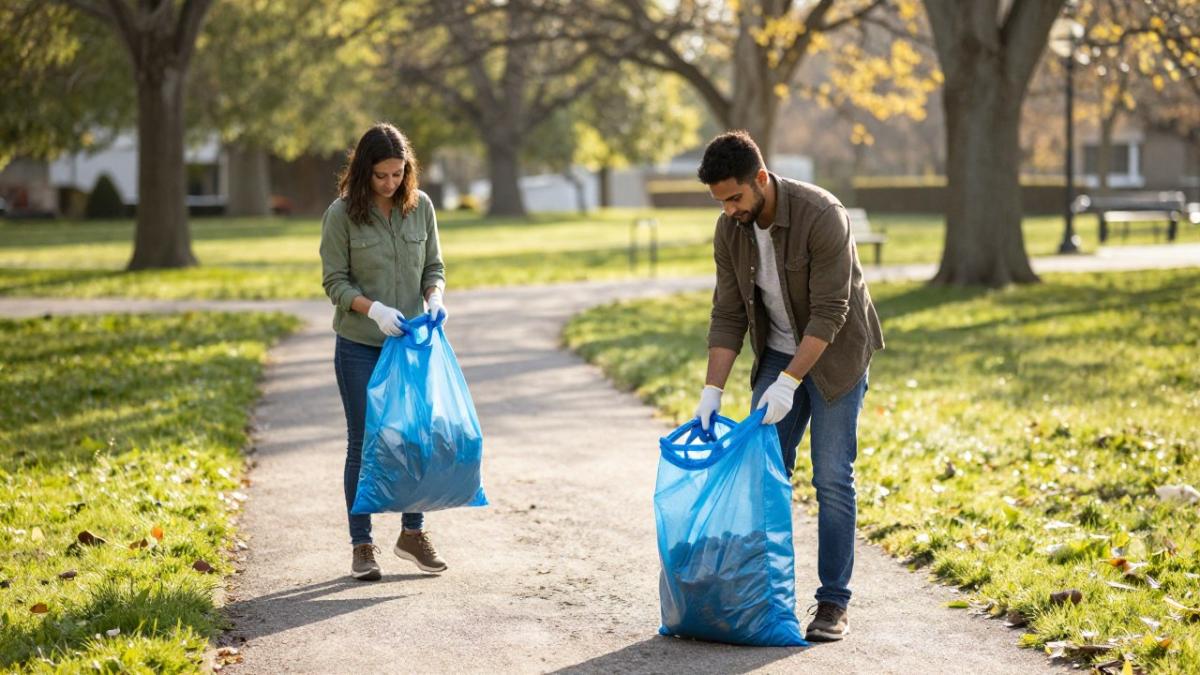
The park cleanup challenge turns a volunteer activity into a friendly competition: teams collect litter and recyclables from a designated outdoor area, sorted and counted at the end. It works for hybrid groups because the scoring is objective and the remote role is genuinely useful. A shared team shirt can carry the cleanup’s spirit beyond the park, while Piercy Sports and Apparel connects that sense of belonging with outfitting remote teams.
Setup and Objectives
Objectives: shared goals, team spirit, morale.
- Confirm the cleanup rules with your local parks department before the event.
- Divide the site into zones and assign one zone per team.
- Supply gloves, bags, and a simple sorting guide.
- Have remote teammates log each bag's contents and weight as teams report in.
- Award points for volume, sorting accuracy, and the strangest find.
Remote participants build the leaderboard in real time, which gives them a running commentary role.
Watch out: skip the weigh-in if you lack a scale. Guessing weights creates arguments and undermines the scoring.
The woman is American. The man is American.
4. Pickleball Team Tournament
A pickleball team tournament is the strongest option on this list for one reason: it produces real, visible competition with almost no setup. Courts are everywhere, the learning curve is short, and mixed-ability teams can play within minutes.
Setup and Objectives
Objectives: friendly competition, collaboration, morale.
- Book two to four courts for a two-hour block.
- Seed teams so each one mixes skill levels.
- Run a round-robin format with short games to six points.
- Assign remote employees as scorekeepers and bracket managers on a shared sheet.
- Stream one court on a phone tripod so remote staff can follow the final.
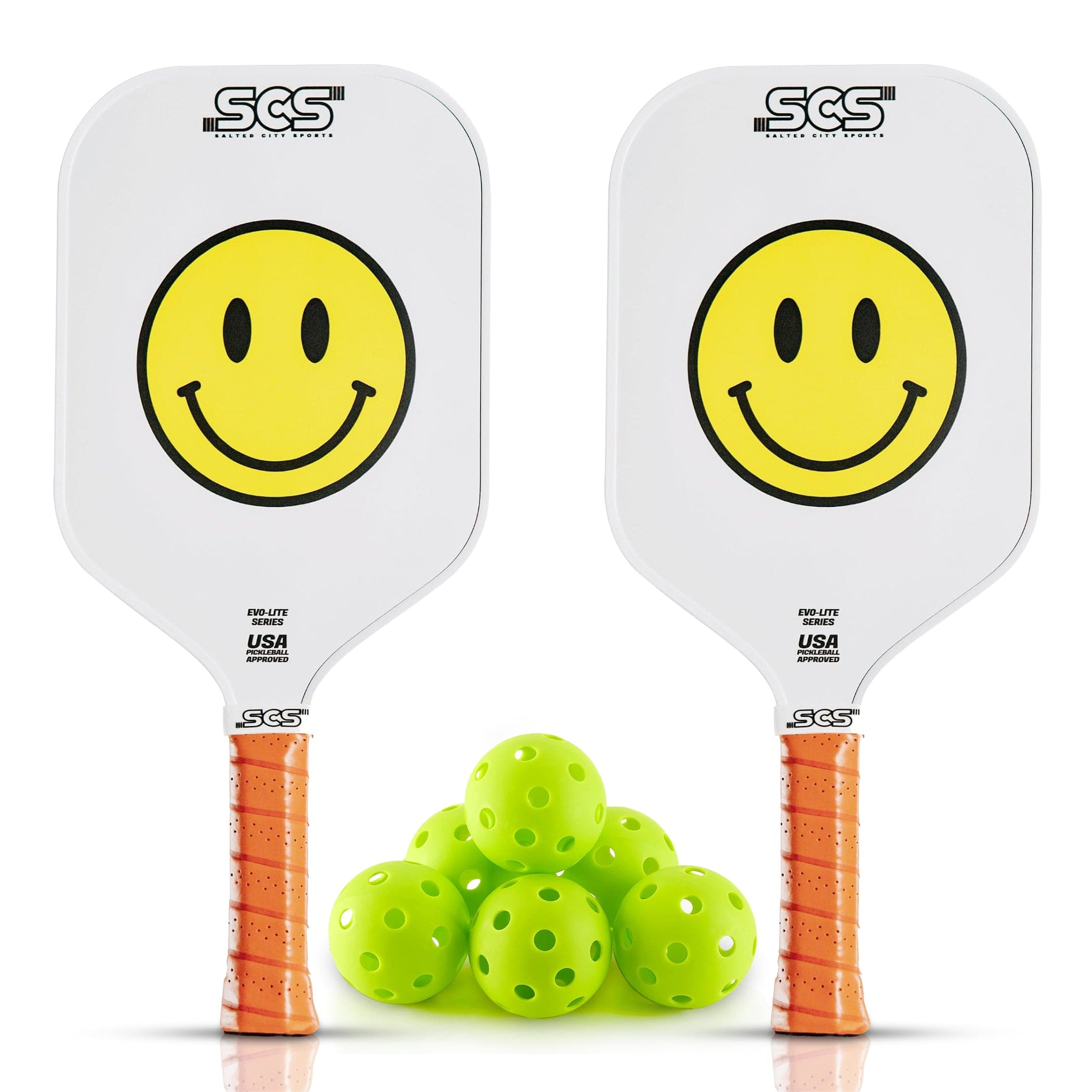
Outfitting the teams matters more than people expect. Our custom team pickleball paddle ships in one to three weeks, and our two paddle pickleball set covers a court without a bulk order. If your group is deciding between sports, our comparison of pickleball vs tennis for corporate team building explains why pickleball wins on space, cost, and time to first rally.

Everyone is American.
5. Nature Art Collaborative Challenge
The nature art collaborative challenge asks teams to build a temporary sculpture from fallen leaves, twigs, stones, and other natural materials found on site, then present it to the group. Remote teammates direct the design and present the final piece on camera.
Setup and Objectives
Objectives: creative challenge, communication, inclusion.
- Set a boundary for gathering so nobody strips a living plant.
- Give each team one theme, such as "our best project" or "the year ahead."
- Let remote members art-direct over video, describing placement and shape.
- Photograph each finished piece from a fixed angle.
- Vote anonymously in a shared poll.
Photograph the art and leave it in place; do not move materials between sites. The Leave No Trace Seven Principles are a sensible baseline for any outdoor activity that touches natural materials.
Simple Outdoor Team Building Activities for Employees Who Are Short on Time
Short-on-time teams should pick activities with a 30-minute setup ceiling, a fixed end point, and a remote role that does not require a separate meeting.
A few practical shortcuts that hold up across group sizes:
- Lunch-hour format. Run a 45-minute photo hunt within walking distance of the office and score it over lunch. Cap the prompt list at 12 items so the timer, not the list, is the constraint.
- Pre-built clues. Reuse the same clue set across quarters and rotate checkpoints instead of rewriting riddles. Store the answer key in a shared document so a remote clue keeper can release hints without a live call.
- One court, one hour. A round-robin on a single pickleball court fits six to eight people comfortably in 60 minutes using games to six points. Two courts double the roster without doubling the runtime.
For teams that need to scale past 50 people without a dedicated facilitator, our list of the 10 best corporate team building activities for large groups covers formats that divide cleanly into zones and shifts.
Remote Team Building Activities That Actually Include Off-Site Employees
Remote team building activities work when the off-site employee holds authority over something the group needs. That is the whole principle. Give them the scoreboard, the clues, or the referee whistle, and participation stops being optional.
Three formats that hold up:
- Remote scorekeeper. One distributed teammate owns the live leaderboard for any on-site game. Give them edit access to the shared sheet and a direct line to one on-site captain.
- Remote clue writer. Distributed staff design the riddles for a clue trail or scavenger hunt ahead of time, then release hints one at a time from a shared document as pairs check in.
- Remote referee. A remote employee rules on disputes and calls the final score. Publish the rules in advance so the referee is enforcing a known standard, not improvising.
Practical remote participation logistics:
- Camera and audio. Ask on-site teams to use a phone tripod or a stabilized handset rather than a laptop webcam, and have remote participants join muted by default with a designated push-to-talk moment. A single roaming on-site buddy who narrates the action beats five people pointing phones at once.
- Mobile access. Confirm every remote participant can open the shared scoring sheet and chat thread on a phone, not just a desktop. Test the links the day before.
- Connectivity. Spotty park Wi-Fi is the most common failure point. Ask remote members to collect photos and scores through a shared chat thread or a mobile hotspot rather than a live video call, and set a fallback phone number for the on-site captain.
Measure success with hybrid-specific signals, not attendance. Track how many remote employees took an active role, whether the shared document was edited by more than one time zone, whether remote participants reported being able to see and hear the action, and whether anyone asked to run the next one.
Frequently Asked Questions
How do you include remote employees in an outdoor team building activity?
Give remote employees a defined role rather than a passive video call. For a photo scavenger hunt, remote players can be the judges who score submissions in a shared channel. For a clue trail, they can hold the answer key and release clues on a timer. Assign one remote co-captain per team so off-site staff help lead, not just watch. Test your video link and shared document before the event, and send remote participants the same briefing sheet the on-site group gets.
What are simple outdoor team building activities for employees with limited time?
A 30-minute photo scavenger hunt needs only a list of five prompts and a shared photo channel. A pickleball round-robin works on any outdoor court and gets everyone moving in under an hour. A park cleanup challenge needs gloves, bags, and a weigh-in at the end. Keep the rules to three sentences or fewer, set one clear time limit, and skip the long debrief. Simple activities run on clear instructions, not elaborate props.
How long should a team building activity last?
Plan 60 to 90 minutes for most outdoor activities, including setup and a short wrap-up. A scavenger hunt or clue trail fits comfortably in 45 to 60 minutes of play. A pickleball tournament needs 90 minutes to two hours if you want every team to play multiple rounds. Anything past two hours in the heat loses energy fast. Build in a 15-minute buffer for late arrivals and equipment handouts.
Are there outdoor team building activities for hybrid teams free of charge?
Yes. A photo scavenger hunt, a clue trail, and a park cleanup cost little beyond basic supplies like gloves and trash bags. A nature art challenge uses fallen leaves, sticks, and stones already on the ground. Pickleball is the one activity with a real equipment cost, but a custom paddle like the Custom Team Pickleball Paddle at $124 doubles as a keepsake your team takes home. Budget for venue permits if you use a reserved park shelter.
How do I measure whether a hybrid outdoor activity worked?
Track participation rate first: how many invited employees actually joined, split by on-site and remote. Then run a two-question survey after the event asking whether people felt included and whether they would do it again. Watch for remote employees speaking up in the shared channel without being prompted. Compare results across events rather than against an industry benchmark, since no reliable public standard exists for hybrid team building outcomes.
