

Last Updated: November 2, 2026
Quick Summary
Paddles banned from play fail the tests that keep the game fair, usually for surface roughness, too much core spring, or misrepresented specs. USA Pickleball removed seven paddles from its approved list in July 2025, and the JOOLA Gen 3 was banned in May 2024 for a trampoline effect.
- USA Pickleball does not allow unapproved or modified paddles in its sanctioned tournaments.
- Adding lead tape, sanding the face, or applying grip enhancers can void a paddle's approval.
- Check the exact model name against the official approved list and screenshot the listing before a tournament.
- The Badlands Evo-Lite Series paddle costs $92.00 and is USA Pickleball Approved.
- Recreational play rarely requires approval, but club organizers can set their own conditions.
Table of Contents
- Why Are Some Pickleball Paddles Banned From Play?
- The Two Tests That Decide a Paddle's Fate
- What Makes a Pickleball Paddle Illegal: Surface, Power, and Fraud
- The JOOLA Gen 3 Case and the Trampoline Effect
- Illegal Pickleball Paddles: Tournament Bans vs. Open Play
- How to Check the USA Pickleball Approved Paddle List
- Pickleball Paddle Modifications That Void Approval
- Choosing Custom Paddles That Stay Legal
- Frequently Asked Questions
Why Are Some Pickleball Paddles Banned From Play?
Paddles get banned because they fail the tests that keep the game fair, and the list of paddles banned keeps growing. USA Pickleball removed seven paddles from its approved list in July 2025, according to Pickleheads' report on the removals. That's the short answer. The longer one involves surface grit, springy cores, and cases of misrepresentation.
At Salted City Sports, we build and customize USA Pickleball Approved paddles, so we track these rules closely. A paddle can be perfectly legal on your driveway court and still be barred from a sanctioned tournament. Below, we'll break down the exact tests, the JOOLA Gen 3 case, and how to check any paddle before you buy.
Why this matters now: the approved list changes. A paddle you bought last season may no longer qualify.
The Two Tests That Decide a Paddle's Fate
Paddle approval comes down to two main checks: how rough the surface is, and how much spring the core delivers. Both affect how much spin and speed a player can generate.
Surface roughness is measured because a gritty face grabs the ball and boosts spin. There's a limit to how rough a face can legally be.
Deflection measures how much the paddle face flexes and rebounds. Too much spring creates a slingshot effect, and that's where the trouble starts. According to DUPR's explanation of approval criteria, common failure points include grit, core compression, deflection, and materials that don't pass testing protocols.
Think of it this way:
- Legal paddle: the ball comes off the face predictably
- Illegal paddle: the face adds energy the player didn't put in
That second category is the one that gets paddles pulled.
What Makes a Pickleball Paddle Illegal: Surface, Power, and Fraud
A paddle is illegal when it exceeds surface or power limits, or when a maker misrepresents what's inside it. Reported reasons for bans include surface-roughness violations and fraud, according to 11 Pickles' coverage of paddle bans.
Surface violations usually mean the face is rougher than the rules allow. That gives a player extra spin that other players can't match with a compliant paddle.
Power violations come from cores that rebound too fast. The ball leaves the face with added velocity.
Fraud is the third and least common category. It covers cases where a paddle doesn't match its submitted specs or its marketing claims.
For a deeper look at what separates a high-performing paddle from a non-compliant one, see our guide on what makes a high performance pickleball paddle.
The JOOLA Gen 3 Case and the Trampoline Effect
The JOOLA Gen 3 saga is the clearest example of how a ban unfolds. The controversy began in May 2024, when USA Pickleball banned the paddles from tournament use, according to Pickleheads' timeline of the decertification.
The reported reason was propulsion technology that created a "trampoline effect," per JustPaddles' writeup on the decertification. In plain terms, the paddle face acted like a spring. The ball bounced off with more energy than the player's swing supplied.
That's a fairness problem. If one player's paddle adds free power, everyone else is competing against the equipment, not the person.
The case also shows how fast the ground can shift. A paddle can be popular, widely sold, and still get pulled mid-season.
Illegal Pickleball Paddles: Tournament Bans vs. Open Play
A tournament ban and a recreational ban are not the same thing. USA Pickleball does not allow unapproved or modified paddles in its sanctioned tournaments.
Recreational play is murkier. Many rec players use whatever feels good, and no one checks. But local organizers can set their own conditions, and some do.
Here's the practical split:
| Setting | Approval Required? | Who Enforces |
|---|---|---|
| USA Pickleball sanctioned tournament | Yes | USA Pickleball |
| Club league or ladder | Often | Local organizer |
| Casual rec play | Rarely | Nobody |
| Corporate or charity event | Varies | Event director |
Watch out: assuming a paddle is fine for a club tournament because it's fine at your local park. Ask the organizer before you register.
How to Check the USA Pickleball Approved Paddle List
You can check a paddle in about two minutes. Paddles used in sanctioned play should appear on USA Pickleball's approved list.
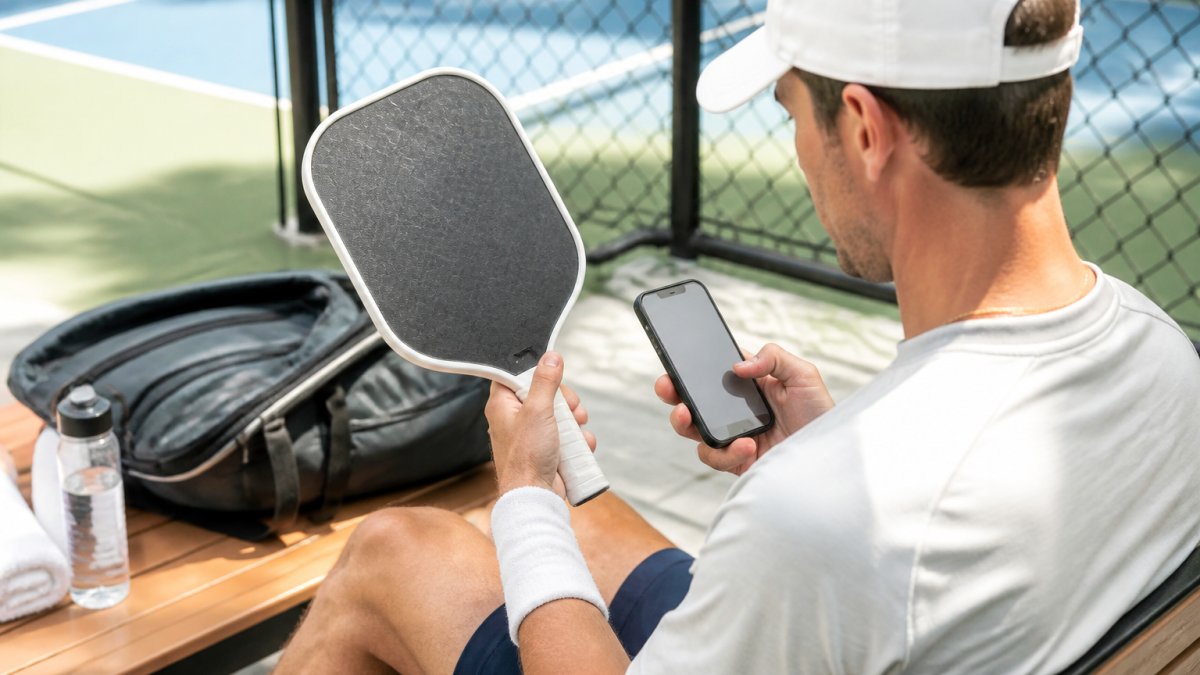
Here's the process:
- Find the exact model name on the paddle face or packaging
- Search the official approved list for that model
- Confirm the listing matches your version, not just the brand
- Screenshot the listing before a tournament
Model names matter. A brand can have one approved model and one that isn't. Our step-by-step walkthrough on how to verify USA Pickleball approved paddles covers the search process in detail.
Pickleball Paddle Modifications That Void Approval
Any change you make to a paddle's surface or structure can void its approval. That includes adding lead tape, sanding the face, or applying grip enhancers.
Pickleball paddle modifications are a common trap. Players add tape for weight or sand a face for extra grit, then wonder why their paddle gets flagged at check-in.
The rules are strict for a reason. A modified face can change spin and power in ways the original testing never covered.
Safer habits:
- Leave the factory surface alone
- Use approved overgrips, not face tape
- Replace worn paddles instead of resurfacing them
- Keep the original packaging if you play tournaments
If you're weighing materials, our breakdown of carbon fiber vs fiberglass paddle durability explains how surface construction affects both play and approval.
Choosing Custom Paddles That Stay Legal
Custom doesn't have to mean non-compliant. The safest path is to start with a paddle that's already on the approved list, then customize the look, not the playing surface.
That's how we approach it at Salted City Sports. Our Evo-Lite Series paddles are USA Pickleball Approved. The Badlands model, for example, runs $92.00 and pairs a 13mm polypropylene core with a fiberglass face for a large sweet spot and steady control.
For players who want a compliant starting point with room to personalize, that's the model we'd point to first.
Best for: rec players and club organizers who want a legal paddle with custom graphics.
Skip if: you're chasing maximum spin through a modified face. That route leads to decertification.
If you want a control-first option, browse our control-first pickleball paddles and our Badlands Evo-Lite Series to see what's available.

Frequently Asked Questions
What makes a pickleball paddle illegal?
A paddle becomes illegal when it fails USA Pickleball's equipment standards. The main triggers are surface roughness that exceeds the grit limit, core or propulsion technology that produces a trampoline effect and adds power beyond the test threshold, and dimensions outside the allowed size. USA Pickleball has removed paddles from its approved list in the past, and some lines have been banned from tournament use. Fraud, such as a manufacturer misrepresenting how a paddle was built, is another reported reason for bans.
Can you use illegal pickleball paddles in recreational play?
Often yes, but it depends on where you play. USA Pickleball's approval rules apply to sanctioned tournaments and events. Open-play sessions at parks, clubs, and community centers set their own conditions, and some organizers require approved gear while others do not. If you plan to enter a tournament, check the approved list first. For casual games, ask the organizer before you bring a decertified paddle to the court.
How do I know if my paddle is approved for tournament play?
Look up the model on the USA Pickleball approved paddle list before you register. Check the list close to your event date rather than relying on the label printed when you bought the paddle. A paddle that was approved at purchase can be decertified later, as the JOOLA Gen 3 case showed. Keep a screenshot of the listing in case a tournament director asks for verification.
Do pickleball paddle modifications make a paddle illegal?
Yes, most modifications do. USA Pickleball does not allow unapproved or modified paddles in its sanctioned tournaments. Adding weight tape to the edge, sanding or texturing the surface for extra spin, altering the handle, or applying coatings all change the paddle from its certified condition. If you want a paddle with a specific feel, buy one built to that spec rather than modifying an approved model.
The approved list keeps moving, and a paddle that passed last year may not pass this one. The fix is simple: buy approved, customize the look, and leave the playing surface alone. Salted City Sports builds USA Pickleball Approved paddles with full-surface customization, no minimum order, and an in-house design team to handle the artwork. Get started with Salted City Sports and put a legal, custom paddle in your bag before your next tournament.
