


Last Updated: November 17, 2026
Quick Summary
Thermoforming paddle feel comes from bonding the face and core into one continuous shell under heat and pressure, producing a firmer, crisper response than a traditionally glued paddle. The ball rebounds faster, the sound is sharper, and dwell time on the face is shorter. Players who drive and counter often love it, while dinkers and touch players may find it too lively.
- A continuous shell holds firmer at the edge, widening the sweet spot and improving torsional stability on mis-hits.
- Thermoforming sits on the power side of the power-versus-control trade-off, shifting the balance toward offense.
- A 16mm thermoformed paddle stays softer than a 14mm thermoformed paddle but crisper than a glued 16mm.
- Judge feel in about 20 minutes on court by testing dinks, resets, drives, volleys and serves.
- Thermoforming does not automatically last longer; core crushing and delamination show up as a performance change first.
Table of Contents
- What Thermoforming Actually Changes in a Paddle
- Thermoformed vs Non-Thermoformed Pickleball Paddles: The Feel Difference
- How Thermoforming Affects Power, Pop, and Sweet Spot Size
- Pickleball Paddle Power vs Control: Where Thermoforming Fits
- Pickleball Paddle Thickness 14mm vs 16mm: Feel in a Thermoformed Frame
- A Step-by-Step Feel Test You Can Run in One Session
- Pickleball Paddle Lifespan: What Thermoforming Means for Wear and Warranty
- Choosing a Paddle Based on the Feel You Want
- Frequently Asked Questions
What Thermoforming Actually Changes in a Paddle
The thermoforming paddle feel comes from bonding the face and core into one continuous shell under heat and pressure, which produces a firmer, crisper response than a traditionally glued paddle. That single construction change affects pop, sound, and how the ball leaves the face. Below, we'll show you exactly how that shift shows up in your hand, and where the marketing claims outrun the reality.
The Process in Plain Terms
A traditional paddle is assembled. The honeycomb core is cut, the face sheets are glued on, and an edge guard wraps the perimeter. A thermoformed paddle skips the glue-up.
That construction is why a thermoformed paddle usually feels stiffer. There is less give at the perimeter, so energy transfers more directly into the ball. A cold-pressed construction, by contrast, keeps the layered build and a softer, more muted response.
The trade-off is real. Thermoforming can be tied to core crushing and delamination when the process is poorly controlled, producing a trampoline-like response instead of a clean one. The label alone guarantees nothing.
Thermoformed vs Non-Thermoformed Pickleball Paddles: The Feel Difference
Thermoformed paddles feel firmer and louder, while non-thermoformed paddles feel softer and more muted. That is the short version. The long version matters more if you play with touch.
The thermoforming paddle feel is crisp, and a thermoformed paddle gives you that response.
The non-thermoformed build keeps a softer feel. The face flexes slightly more, the ball sits a fraction longer, and off-center contact feels less punishing.
| Trait | Thermoformed | Non-Thermoformed |
|---|---|---|
| Feel | Firm, crisp | Soft, muted |
| Sound | Louder pop | Quieter thud |
| Dwell time | Shorter | Longer |
| Edge stability | Higher | Moderate |
| Best for | Drivers, counters | Dinkers, touch players |
Shock absorption often drives these differences. If that is your priority, our breakdown of the paddle cores that absorb shock best explains which core types soften impact.
How Thermoforming Affects Power, Pop, and Sweet Spot Size
A 2026 trend analysis from Play With Arti's paddle technology coverage notes that well-executed thermoforming can produce stiffer paddles with larger sweet spots.
Sweet spot size is where thermoforming earns its reputation. A glued paddle can flex near the edge, so an off-center hit loses energy. A continuous shell holds firmer out there, which widens the effective hitting zone and improves torsional stability on mis-hits.
Here is the catch most buyers miss. A bigger sweet spot does not automatically mean better control. For a deeper look at what separates elite paddles from average ones, see our guide to what makes a high performance pickleball paddle.
Pickleball Paddle Power vs Control: Where Thermoforming Fits
Thermoforming sits on the power side of the power-versus-control trade-off. It does not eliminate control, but it shifts the balance toward offense. Understanding where a paddle lands on that spectrum is more useful than any single spec.
Power comes from stiffness, mass, and how cleanly energy transfers. Control comes from dwell time, a softer face, and predictable rebound. Thermoforming pushes the first set up and pulls the second set down slightly.
So who should care? Players who feel their drives lack bite, or who lose rallies because counters die on the paddle, usually gain from a firmer build.
Pickleball Paddle Thickness 14mm vs 16mm: Feel in a Thermoformed Frame
Thickness changes feel as much as construction does, and the two interact. The problem is that most buyers attribute every sensation to thermoforming when thickness, core material, face material, shape, weight, and surface texture are all pulling on the same rope. This section separates those variables so you can tell which one is actually responsible for what you feel.
Start with the thickness baseline. A 16mm core has more material between the faces, which usually means longer dwell time, a softer response, and better shock absorption.
Now layer thermoforming on top. Our Evo-Lite Series paddles, including the Badlands, use a 13mm heat-treated polypropylene core for a large sweet spot and a quick, responsive face.
Here is where buyers go wrong. They hit a 16mm thermoformed paddle, feel pop, and conclude thermoforming caused it.
Isolating the variables:
- Thickness: Compare a 14mm and a 16mm of the same model and construction. The difference you feel is thickness.
- Construction: Compare a thermoformed and a cold-pressed paddle of the same thickness and core. The difference you feel is the bond.
- Core material: Polypropylene, honeycomb density, and foam-injected edges change rebound and sound independently of the shell.
- Face material: Carbon fiber, fiberglass, and woven surfaces change dwell and spin without changing stiffness much.
- Shape and weight: Elongated shapes shift twist weight and swing weight; static weight changes plow-through and hand speed.
- Surface texture: Grit and texture affect spin and ball bite, not the firmness of the response.
A common pattern is that players who want a soft kitchen game buy a thick thermoformed paddle, then blame thermoforming for the pop they feel.
The practical rule: pick thickness for your touch needs, pick construction for your power needs, and pick face texture for your spin needs.
A Step-by-Step Feel Test You Can Run in One Session
You can judge a paddle's feel in about 20 minutes on court, but only if you test the shots you actually play.
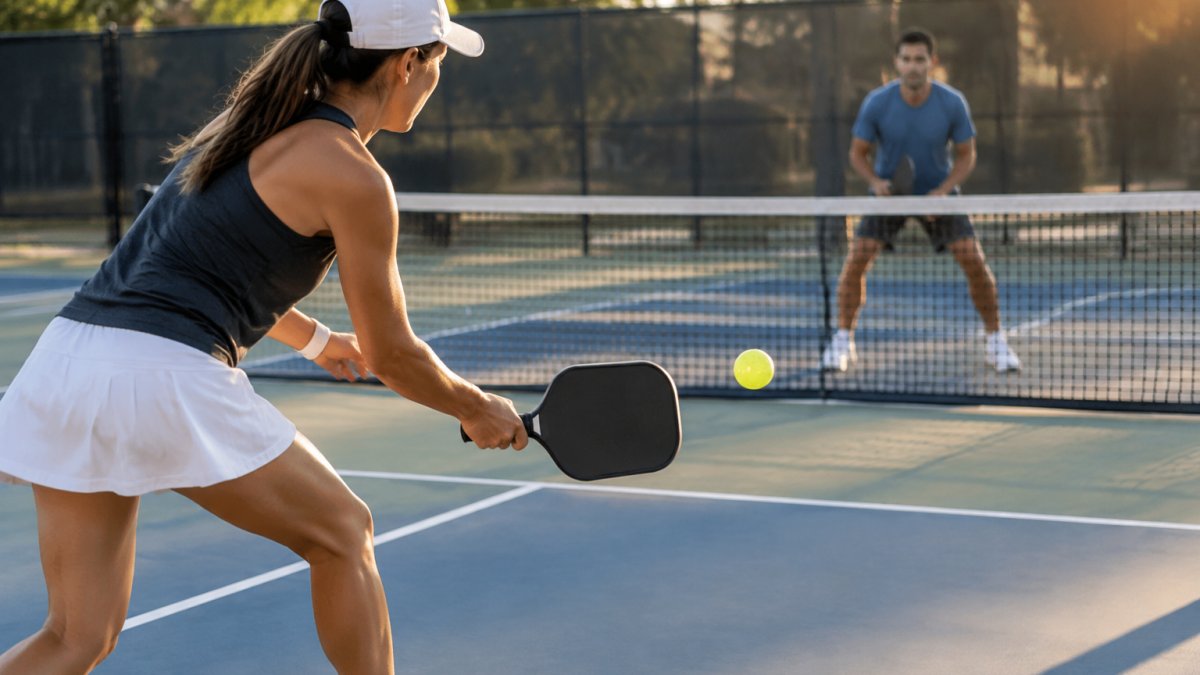
- Warm up for five minutes with the same paddle. Do not evaluate anything yet.
- Hit 20 dinks cross-court. Note whether the ball jumps off the face or settles. Crisp means thermoformed-style pop; muted means a softer build. For a dinker, a jumpy face is a liability; for a driver, it is feedback that the face is doing work.
- Hit 15 resets from the transition zone. Watch for trampoline effect on off-center contact. A firm shell should feel stable, not springy. If resets pop up, the paddle is adding energy you did not ask for.
- Drive 10 balls from the baseline. Listen to the sound. A sharp crack signals a stiff face; a dull thud signals flex. Drivers usually want the crack; touch players usually want the thud.
- Strike the face with your palm at the center, then near the edge. Compare the vibration. Large differences mean a small sweet spot. This is the fastest way to feel twist weight without a lab.
- Volley 10 balls at the net. Fast hands expose twist. If the paddle twists in your grip, twist weight is low for your swing. Net players with quick hands feel this first.
- Serve 10 balls and note whether the paddle adds pace or absorbs it. Servers who rely on placement want predictability; servers who rely on pace want the extra energy.
Run the same drill with a second paddle back to back. Feel memory fades in minutes, so side-by-side comparison beats memory every time.
Reading the results by skill level:
- Beginners should prioritize forgiveness and a predictable response. A paddle that twists on off-center hits teaches bad habits; a stable, slightly softer build lets you learn the stroke first.
- Intermediate players usually benefit from a thermoformed frame because the larger effective sweet spot masks mis-hits while they build consistency.
- Advanced players can afford to specialize. A firm thermoformed frame rewards aggressive drivers and counters; a softer cold-pressed frame rewards kitchen-line control and placement.
Reading the results by shot type:
- Dinks and resets: softer, longer dwell wins. If the ball flies off the face, you will fight your own paddle.
- Drives and serves: firmer, shorter dwell wins. If the ball feels dead, you are losing energy at the face.
- Volleys: twist weight wins. If the paddle twists, you will lose the exchange.
- Off-center hits: a continuous shell should feel stable out to the edge; a glued build will flex and lose energy.
Watch out: testing two paddles with different grips, weights, or balance points at the same time confounds the result, you will attribute a weight difference to construction. Match the variables as closely as you can before you compare.
For a deeper look at what separates elite paddles from average ones, see our guide to what makes a high performance pickleball paddle.
Pickleball Paddle Lifespan: What Thermoforming Means for Wear and Warranty
A thermoformed paddle does not automatically last longer. Durability depends on how well the bond holds.
But thermoforming has its own failure modes. Core crushing can flatten the honeycomb and kill the pop. Delamination can separate layers and create that trampoline feel. Both show up as a performance change you notice before you see damage.
Inspect monthly:
- Run a thumb across the face for soft spots or bubbles
- Check the edge guard for lifting or gaps
- Tap the face and listen for a dead or buzzing spot
- Compare pop against a new paddle of the same model
For a full comparison of how face materials wear, see carbon fiber vs fiberglass paddle durability, and for timing, our guide on when to replace your paddle covers the signs.
Choosing a Paddle Based on the Feel You Want
Start with the feel you want, then work backward to construction. Most buyers do the reverse and end up with a paddle that fights their game.
- Want maximum pop and a big sweet spot? Choose a thermoformed frame with a thinner core.
- Want soft touch at the kitchen line? Choose a non-thermoformed or cold-pressed build with a thicker core.
- Want a balance? A 16mm thermoformed paddle splits the difference.
- Want spin without losing control? Prioritize face texture and grit alongside construction.
Then confirm the details: grip size, weight, and USA Pickleball approval if you play sanctioned events. You can browse our thermoformed paddle lineup to match a build to your feel preference.
The real challenge is not understanding thermoforming. It is finding a paddle that matches your feel without giving up the look you want. Salted City Sports builds USA Pickleball Approved paddles with heat-treated polypropylene cores, a textured fiberglass face for spin, and full-surface customization with no minimum order.
Frequently Asked Questions
Are thermoformed pickleball paddles better?
Not automatically. Thermoforming bonds the face and core into a continuous shell, which typically produces a firmer, crisper response and more edge stability. But the label alone does not guarantee a better feel. Poorly made thermoformed paddles can suffer core crushing or delamination, which creates an inconsistent, trampoline-like response. Judge a specific paddle by how it plays in your hands, not by whether the word thermoformed appears on the box.
How does thermoforming affect a pickleball paddle's power and pop?
The bonded shell reduces energy lost at the edges, so more of your swing transfers to the ball. That extra pop cuts both ways: it helps when you need to put a ball away, but it can make soft dinks and resets harder to control until you adjust. If your game leans on touch, test a thermoformed paddle at the net before committing.
Do thermoformed paddles feel stiffer than non-thermoformed paddles?
Generally yes. Traditional cold-pressed paddles with a separate edge guard feel softer and more muted, with a bit more dwell time on the face. Thermoformed paddles feel firmer and louder, and the ball leaves the face faster. Neither is better in the abstract. Control players often prefer the softer response, while players who want a crisp, immediate feel tend to gravitate toward thermoformed construction.
What is the average lifespan of a pickleball paddle?
Watch for a deadened response, a rattle inside the core, or visible face or edge separation. Thermoformed paddles are not immune to wear, so inspect the perimeter seam and the face texture every few weeks and retire the paddle once the response changes noticeably.
